

Properties
Soluble in water of various hardness levels. Resistant to acids and alkalis, it offers advantages such as even dyeing, emulsification, lubrication, and diffusion. As a nonionic surfactant, it is used as a stabilizer and wetting agent for natural and synthetic latex adhesives, improving the penetration and coating properties of latex adhesives. It also prevents coagulation caused by high-speed agitation or pumping.
Applications
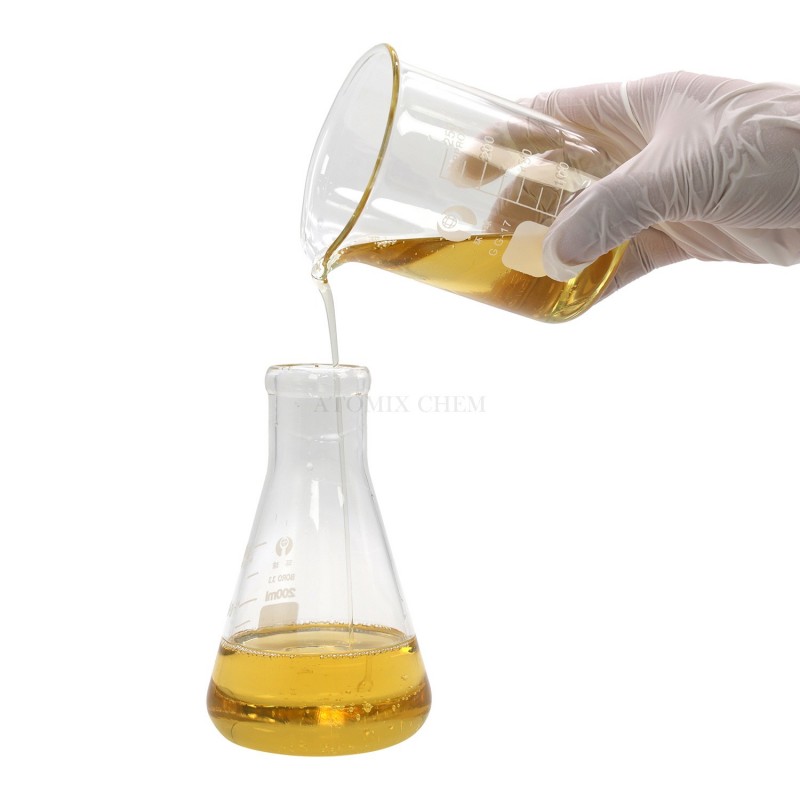
Triton is a commonly used nonionic surfactant. It appears as a colorless or nearly transparent viscous liquid and is soluble in water, toluene, xylene, and ethanol, but insoluble in petroleum ether. The two most commonly used types are Triton-100 and Triton-114. Triton-100 is polyethylene glycol mono-octylphenyl ether, while Triton-114 is diethylene glycol mono[(1,1,3,3-tetramethylbutyl)phenyl] ether. Diethylene glycol mono[(1,1,3,3-tetramethylbutyl)phenyl] ether is a post-additive in the production of paste resins; it reduces the viscosity of the paste and aids in foaming. It is primarily used as an emulsifier, plastic dripper, and antistatic agent.
Toxicity
Harmful if swallowed; causes severe irritation to the skin and eyes.

WORLDWIDE

WORLDWIDE

YEARLY

WORKDAY

